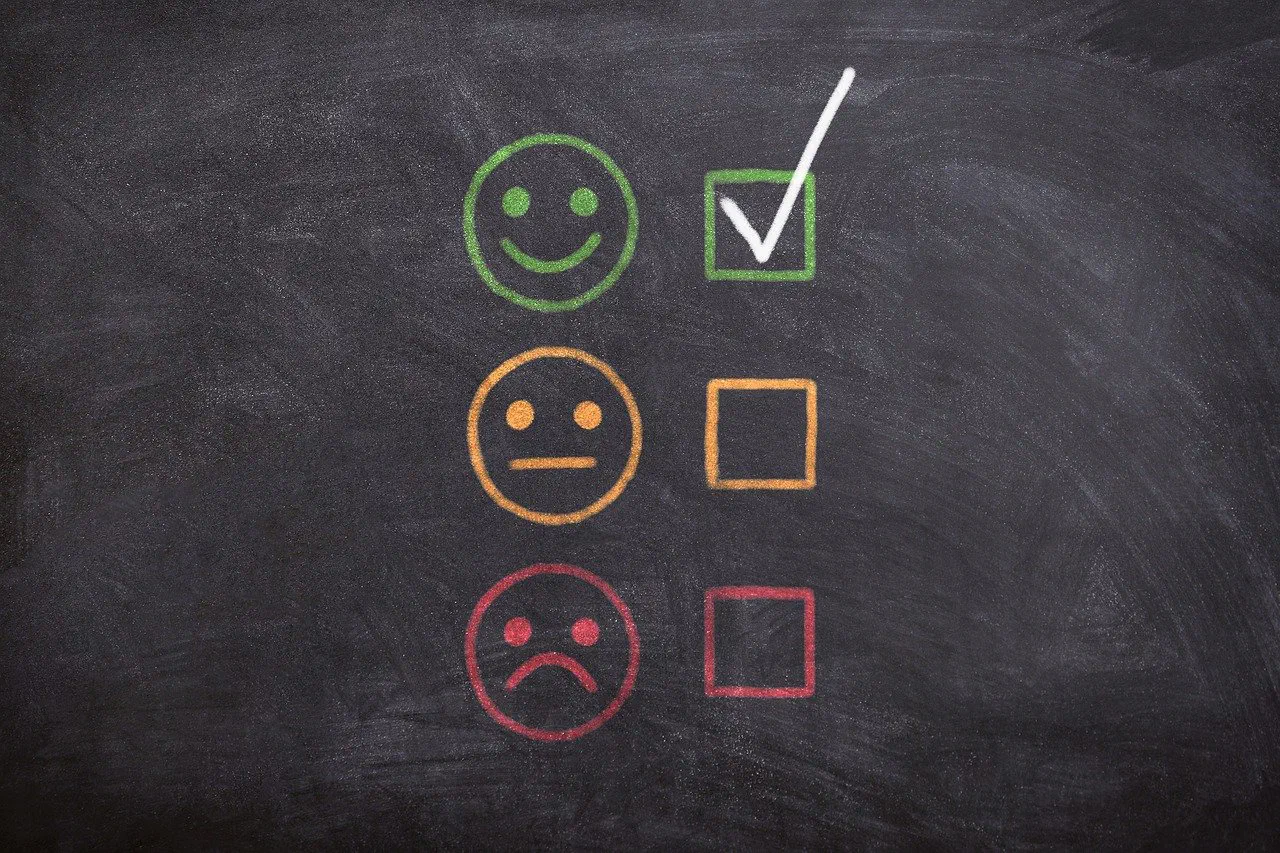
Congratulations, that’s the right answer! … Wrong answer! … Try again! … You rushed that one! If you have ever seen an e-learning course, you have probably met at least one of the sentences above. How much pedagogical value do they add? Congratulations, that’s the right answer… not much.
Types of assessment
Interactivity is an essential part of an e-learning course, because without active participation and engagement the learning process cannot be effective. If the learner has to carry out some activity while learning, it is essential that they also receive feedback on their performance.
The two most common forms of assessment are summative (usually a grade or percentage at the end of a section) and formative (usually in words, during the learning process). In this article I want to deal only with formative assessment, whose main functions are feedback and identifying mistakes; from here on I use the word “feedback” in that sense.
What is feedback good for?
- It gives direction — we can restate the learning objectives and show the learner where they stand in reaching them.
- It motivates.
- It helps uncover mistakes — it is tailored to the individual.
- It shows the consequences of choices — correct answers stick far better if we show the consequences of both the wrong and the right ones.
- It can offer new perspectives on the topic.
In the light of these points it becomes clearer why vacuous, canned “feedback” cannot fulfil any of the functions of feedback. Compared with the stock sentences listed at the start of this article, even a bare green tick or red cross is far more to the point: it tells you whether the answer is right, without burdening anyone with pointless reading.
What does good feedback look like?
- It highlights not only the mistakes but also what went well, since those are not always conscious either.
- Start with the fact of the mistake, continue with why it is a mistake, then move on to the consequences. After that, “steer the learner back on track”: bring in new perspectives and examples.
- It can work well if, while setting out the consequences, the words intended as feedback are spoken by a character in the story. For example, in an imagined occupational-safety task we make a poor decision, and according to the feedback we end up at the doctor, who warns us to be more careful.
- Do not assess or characterise the learner, but the answer they gave to the question.
- Do not draw the conclusions for the learner when the consequence itself can serve as the feedback. For example, in a simulation task we have to indicate with a vehicle, but the learner pushes the windscreen-wiper stalk: it is worth more for the wipers to come on than for a sentence to say “Wrong answer, that is the windscreen wiper”.
Sources:
Moore, C. (2013, January 29). Feedback in elearning scenarios: Let them think! Training Design - Cathy Moore. https://blog.cathy-moore.com/2013/01/feedback-in-scenarios-let-them-think/
Wiggins, G. (2020, October 15). 7 Key Characteristics Of Better Learning Feedback. TeachThought. https://www.teachthought.com/pedagogy/7-key-characteristics-of-better-learning-feedback/
Cseh Ágnes Gabriella: A tanulói értékelés széles körű értelmezése a gyakorlat számára. (2012, August 8). Taní-Tani Online. http://www.tani-tani.info/082_cseh
Author: Mariann Tóth